You’ve probably heard someone shout “bravo!” after a great performance but then you might have seen “brava” written online and wondered: Which one is correct? This is exactly why people search for “bravo or brava.”
The confusion comes from gender, language origin, and context. Many English speakers assume bravo is the only correct option, while others believe brava is a mistake or a modern trend.
In reality, both words are correct but they are not interchangeable in every situation.
This article clears up that confusion in a simple, practical way. You’ll learn the quick answer, where these words come from, how English actually uses them, and which one you should choose based on your audience.
We’ll also look at common mistakes, real-life examples, usage trends, and FAQs so you can use bravo or brava with confidence in writing, speech, and professional settings.
Bravo or Brava – Quick Answer
Both are correct, but they are used differently.
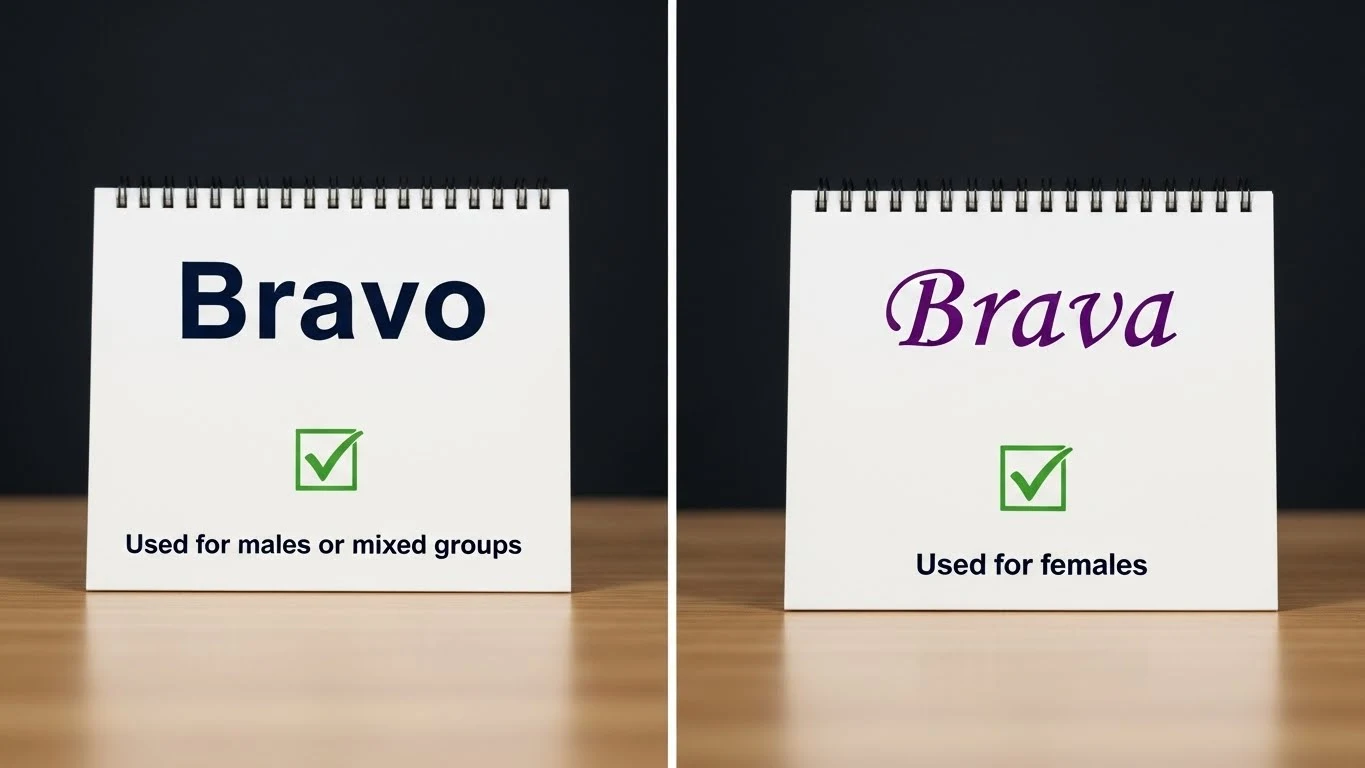
- Bravo → Used for a male performer or a mixed group
- Brava → Used for a female performer
Examples:
bravo vs brava
- Bravo! That speech was excellent. (male speaker or general praise)
- Brava! She sang beautifully. (female singer)
In everyday English, “bravo” is far more common and often used for everyone.
The Origin of Bravo or Brava
The words bravo and brava come from Italian, where adjectives change based on gender.
- Bravo = masculine form
- Brava = feminine form
- (Plural forms also exist: bravi and brave)
In Italian opera and theatre, audiences traditionally shout the gender-matched word to praise performers. English borrowed these words, but over time, English simplified usage favoring bravo as the default.
That’s why spelling and usage differences exist today.
bravo vs brava
British English vs American English Spelling
There is no spelling difference between British and American English for these words. The difference is in usage preference, not spelling rules.
| Variant | British English | American English |
| Bravo | Very common | Very common |
| Brava | Used but less common | Rarely used |
| Gender distinction | Sometimes respected | Often ignored |
Both dialects understand brava, but bravo dominates in real usage.
Read More Miss or Mrs: Know the Correct Title to Use Today Now
Which Spelling Should You Use?
bravo vs brava
- US audience → Use bravo in almost all cases
- UK / Europe / Arts context → Use brava for women if you want to be precise
- Global or professional writing → Use bravo to avoid confusion
Safe rule:
👉 If unsure, use “bravo.”
Common Mistakes with Bravo or Brava
❌ Using brava when praising a man
✔ Use bravo
❌ Thinking brava is incorrect
✔ It’s correct, just less common
❌ Mixing plural forms incorrectly
✔ Bravi (men or mixed), Brave (women)
❌ Overcorrecting in casual English
✔ Everyday English prefers simplicity
Bravo or Brava in Everyday Examples
Emails:
- Bravo on completing the project ahead of time.
News:
- The actor received a loud “bravo” from the audience.
Social Media:
- Brava! You crushed that performance 👏
Formal Writing:
- The soprano earned repeated cries of “brava.”
Bravo or Brava – Google Trends & Usage Data
Search and usage data show:
- “Bravo” is dominant worldwide
- “Brava” appears mostly in:
- Opera
- Classical music
- European media
- English-speaking countries overwhelmingly prefer bravo
This shows that while both terms exist, one clearly leads in popularity.
Bravo or Brava – Comparison Table
| Term | Gender | Common Usage | Safe for Global Use |
| Bravo | Male / Neutral | Very High | ✅ Yes |
| Brava | Female | Low | ⚠️ Context-specific |
| Bravi | Male / Mixed (plural) | Rare | ❌ No |
| Brave | Female (plural) | Very Rare | ❌ No |
FAQs About Bravo or Brava
1. Is “brava” incorrect in English?
No. It’s correct but less commonly used.
2. Can I say “bravo” to a woman?
Yes. Most English speakers do.
3. Is “brava” more formal?
It’s more traditional, especially in opera.
4. Which is better for writing?
Use bravo unless context demands accuracy.
5. Are these words Italian only?
They are Italian in origin but widely used in English.
6. Does British English prefer “brava”?
Slightly more than American English, but still rare.
7. What about mixed groups?
Use bravo or bravi (formal contexts only).
Conclusion
The choice between bravo or brava is not about right or wrong it’s about context and audience. Both words come from Italian, where gender matters, but English has simplified their use over time.
Today, “bravo” acts as the universal, safe option for praise in speech and writing.
If you’re in a professional, global, or casual English setting, bravo is the best choice. If you’re writing about opera, theatre, or want to respect traditional usage, brava can be used for female performers.
Understanding this distinction helps you sound confident, informed, and clear without overthinking it.

Mark Nichol is an English language writer and editor.
He focuses on spelling confusion, word comparisons, and clear usage rules.