
If you’ve searched “bunko or bunco”, you’re not alone. Many writers, students, and even native English speakers get confused by these two spellings.
They look almost identical, sound exactly the same, and often appear in similar contexts. So why does this confusion exist, and which spelling is actually correct?
The confusion usually comes from two different uses of the word. One refers to a popular dice game, often played at social gatherings. The other relates to fraud or scams,
commonly used in legal or news writing. Depending on the context, the spelling changes and using the wrong one can make your writing look careless or unclear.
This article solves that confusion once and for all. You’ll get a quick answer, learn the origin of both spellings, see how British and American English treat them, and understand which version to use based on your audience.
We’ll also cover common mistakes, real-life examples, usage trends, and FAQs all in simple, clear language. By the end, you’ll confidently know when to use bunko and when to use bunco.
Bunko or Bunco – Quick Answer
Both spellings are correct, but they are used differently.
- Bunco → Refers to a dice game played socially.
Example: We’re hosting a bunco night this Friday. - Bunko → Refers to fraud, scams, or swindling (often in legal or news contexts).
Example: He was arrested for running a bunko scheme.
The Origin of Bunko or Bunco
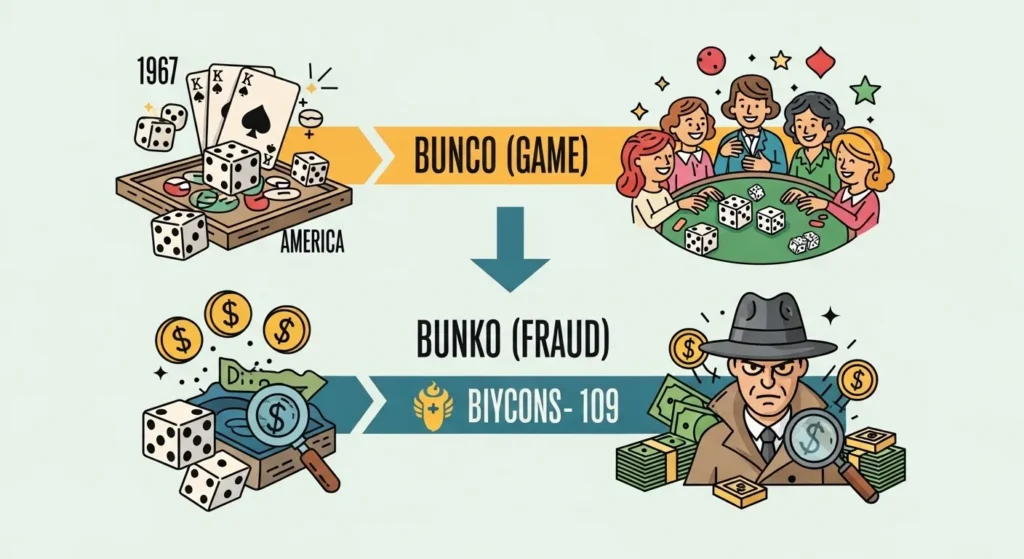
Both words come from the same source. They trace back to the 19th century United States, where bunco was originally a dice game often used to cheat players. Over time, the meaning split into two paths.
- Bunco stayed connected to the game.
- Bunko evolved as a slang term meaning fraud or deception.
The spelling difference developed naturally as usage became more specialized. Writers and publishers began using bunko to clearly separate criminal activity from the harmless game.
British English vs American English Spelling
Unlike many spelling debates, this one is not mainly about British vs American English. It’s about meaning, not location.
| Context | Preferred Spelling | Example |
| Dice game | Bunco | She plays bunco every month. |
| Fraud or scam | Bunko | The police busted a bunko ring. |
| British English | Rare | Often explained as American usage |
| American English | Common | Both spellings widely used |
Which Spelling Should You Use?
Choose based on context and audience:
- US audience
- Game → Bunco
- Crime → Bunko
- UK/Commonwealth audience
- Use bunco, but explain the meaning clearly.
- Global or SEO writing
- Use both, clearly defining each one early in the article.
- Read More.Wonderlust or Wanderlust: Which Spelling Is Correct and Why It Matters?
Common Mistakes with Bunko or Bunco
Here are frequent errors to avoid:
- ❌ Using bunco when talking about fraud
✔️ Use bunko instead. - ❌ Using bunko for the dice game
✔️ Use bunco for the game. - ❌ Assuming it’s a British vs American spelling issue
✔️ It’s about meaning, not region.
Bunko or Bunco in Everyday Examples
- Email:
Are you coming to the bunco party this weekend? - News:
Authorities shut down a large bunko operation. - Social Media:
Girls’ night = wine and bunco 🎲 - Formal Writing:
The defendant was charged with bunko-related offenses.
Bunko or Bunco – Google Trends & Usage Data
Search trends show:
- Bunco is more popular in lifestyle, event, and hobby searches.
- Bunko appears more in legal, crime, and news-related content.
- The US shows the highest search volume for both terms.
- Outside the US, searches spike mainly due to curiosity or clarification.
Comparison Table: Bunko vs Bunco
| Feature | Bunko | Bunco |
| Meaning | Fraud, scam | Dice game |
| Tone | Legal, serious | Social, casual |
| Common Use | News, law | Parties, clubs |
| Region | Mostly US | Mostly US |
| SEO Context | Crime-related | Lifestyle-related |
FAQs: Bunko or Bunco
1. Are bunko and bunco the same word?
They share origins but have different meanings today.
2. Is bunco always a game?
Yes, in modern usage.
3. Is bunko a real legal term?
Yes, it’s used informally in crime reporting.
4. Which spelling is older?
Bunco came first.
5. Can I use both in one article?
Yes, if you explain the difference clearly.
6. Is bunco used in British English?
Rarely, and usually with explanation.
7. Which spelling is better for SEO?
Use both, but define them clearly.
Conclusion
The debate between bunko or bunco isn’t about spelling rules or regional English. It’s about meaning and context. Both spellings are correct, but they serve different purposes. Bunco is the friendly,
social dice game played at parties and gatherings. Bunko, on the other hand, belongs to the world of scams, fraud, and crime reporting.
Understanding this distinction helps you write more clearly and professionally. Whether you’re planning a fun game night, writing an article, or reporting on criminal activity,
choosing the correct spelling builds trust with your audience. For global or -focused content, using both terms with clear explanations is often the smartest approach.
In short, don’t guess. Match the spelling to the meaning. When you do, your writing becomes sharper, more accurate, and easier for readers to understand.

Henry Watson Fowler was a British lexicographer best known for his work on English usage. His writings focus on clarity, correctness, and practical grammar. Fowler’s approach still influences modern English learners.