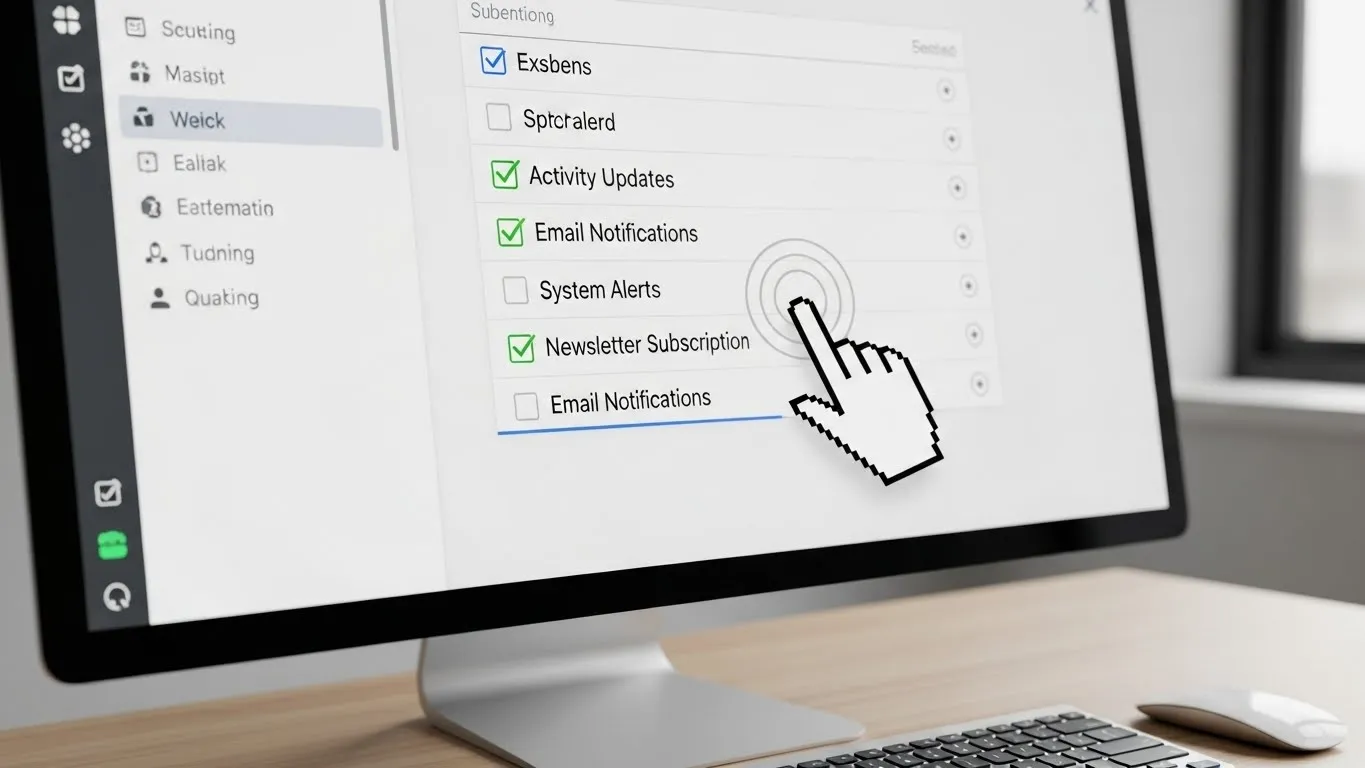
If you have ever worked with software, online forms, apps, or settings menus, you’ve likely wondered: should I write deselect or unselect? This confusion is extremely common,
especially for writers, developers, students, and professionals creating instructions or help guides. Both words seem logical, both appear in real usage, and both are understood by readers yet only one is clearly preferred in standard English.
People search for “deselect or unselect” because they want a fast, confident answer. They don’t want to sound unprofessional in documentation, emails, or UI text.
They also want to know whether one word is American, British, or technical jargon and whether using the “wrong” one might hurt clarity or SEO.
This article solves that confusion completely. You’ll get a quick answer, a clear explanation of word origins, spelling preferences in British vs American English, real-world examples,
common mistakes to avoid, and practical advice on which word you should use depending on your audience. By the end, you’ll know exactly when and why to choose deselect or unselect without second-guessing.
Deselect or Unselect – Quick Answer
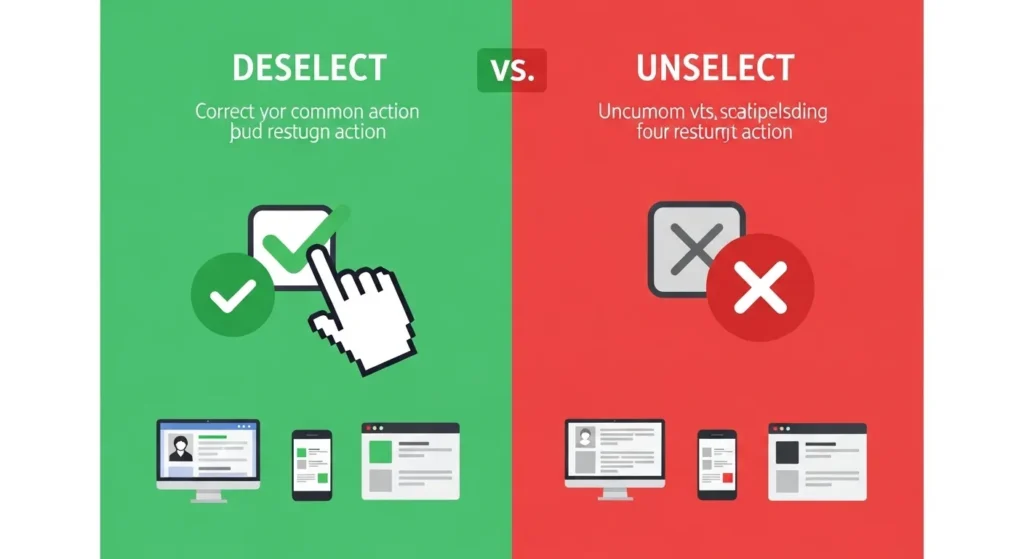
Deselect is the correct and widely accepted word in standard English.
Unselect exists but is rare and considered nonstandard or informal.
Examples:
- ✅ Please deselect the checkbox to continue.
- ❌ Please unselect the checkbox to continue. (understood, but not preferred)
In professional writing, deselect is the safer and clearer choice.
The Origin of Deselect or Unselect
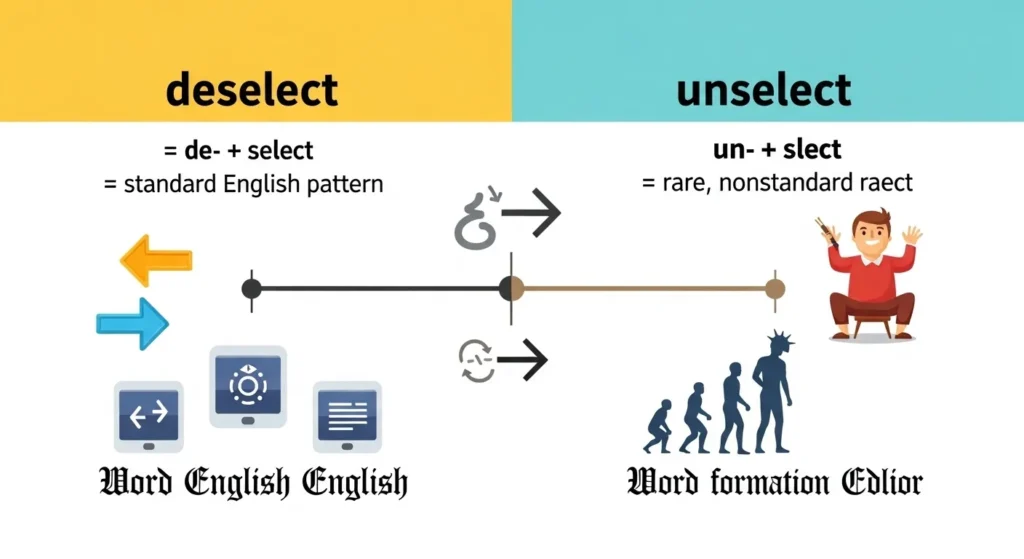
The word deselect comes from the prefix de-, meaning remove, reverse, or undo, combined with select. This structure follows standard English patterns like deactivate, decode, and defrost.
Unselect, on the other hand, uses the prefix un-, which usually means not or reverse. While grammatically possible, unselect never gained wide acceptance in formal dictionaries or style guides.
Why the difference exists:
- De- is commonly used for reversing actions.
- Un- is more common with adjectives than verbs.
- Editors and linguists favored deselect for clarity and consistency.
British English vs American English Spelling
There is no spelling difference between British and American English for this word.
| Variant | British English | American English |
| Deselect | ✅ Preferred | ✅ Preferred |
| Unselect | ⚠️ Rare | ⚠️ Rare |
Unlike colour/color or organise/organize, this is a usage issue, not a spelling one.
Which Spelling Should You Use?
Your audience matters—but the answer stays the same.
- US audience: Use deselect
- UK/Commonwealth audience: Use deselect
- Global or professional audience: Always use deselect
If you want clarity, authority, and correctness, deselect is the best choice everywhere.
Common Mistakes with Deselect or Unselect
Here are frequent errors and how to fix them:
- ❌ Using unselect in formal writing
✅ Use deselect instead - ❌ Mixing both terms in the same document
✅ Choose one (preferably deselect) and stay consistent - ❌ Assuming unselect is American English
✅ It is not standard in any major English variety
Deselect or Unselect in Everyday Examples
Emails:
- Please deselect the attachments before sending the email.
News & Tech Writing:
- Users can deselect notifications in the settings menu.
Social Media:
- Don’t forget to deselect tags you don’t want.
Formal Writing:
- Participants were asked to deselect previously chosen options.
Deselect or Unselect – Google Trends & Usage Data
Search and usage data consistently show that deselect is far more popular worldwide.
Usage patterns:
- High usage: US, UK, Canada, Australia, India
- Common contexts: Software instructions, UX writing, forms, documentation
- Unselect usage: Mostly informal speech or non-native writing
In professional and SEO-focused content, deselect dominates.
Comparison Table: Deselect vs Unselect
| Feature | Deselect | Unselect |
| Dictionary accepted | ✅ Yes | ⚠️ Limited |
| Formal writing | ✅ Recommended | ❌ Not advised |
| US English | ✅ Common | ❌ Rare |
| UK English | ✅ Common | ❌ Rare |
| Technical writing | ✅ Standard | ❌ Avoid |
FAQs
1. Is unselect a real word?
Yes, but it is rare and not preferred in standard English.
2. Which word do dictionaries recommend?
Most dictionaries list deselect as the correct form.
3. Is unselect American English?
No. Deselect is standard in both US and UK English.
4. Can I use unselect in casual writing?
You can, but deselect still sounds clearer and more professional.
5. What word should I use in UI or UX writing?
Always use deselect.
6. Does Google prefer deselect or unselect?
Search data strongly favors deselect.
7. Are there synonyms for deselect?
Yes: clear selection, remove selection, uncheck (context-dependent).
Read Also.Visualise or Visualize? One Word, Two Spellings—Here’s the Rule
Conclusion
When choosing between deselect or unselect, the answer is clear and consistent: deselect is the correct, professional, and widely accepted word. It follows standard English word-
formation rules, appears in dictionaries, and Deselect or unselect explained clearly. Learn the correct usage, examples, spelling rules, and professional advice for choosing the right word.
real-world usage across countries and industries. While unselect may occasionally appear in casual or informal contexts, it lacks the authority and clarity needed for professional writing.
For emails, articles, software documentation, UX text, and SEO content, deselect ensures your message is understood instantly and correctly. It avoids confusion, improves readability,
and aligns with global English standards. No matter whether your audience is American, British, or international, deselect is always the safest choice.
When clarity matters and it usually does stick with the word that experts, editors, and readers trust.

I am an English language writer and editor specializing in word usage and spelling confusions.
I helps readers clearly understand commonly confused English words through simple explanations and real-world examples.
My work focuses on improving clarity, accuracy, and confidence in everyday English writing.