Many English learners, writers, and even professionals often pause when choosing between “in” and “within.” At first glance, they seem interchangeable, but their usage can subtly change the meaning of a sentence.
People commonly search for “in orwithin spelling” because these two words appear everywhere emails, contracts, news articles, instructions, and deadlines.
A small mistake can lead to confusion, especially in formal or time-sensitive writing.
The core confusion lies in precision. While “in” is simple and flexible, “within” adds a sense of limit, boundary, or time frame. For example, saying “Reply in two days” feels different from “Reply within two days.”
One sounds general; the other is more exact. This article solves that confusion by giving you a quick answer, clear rules, and real-life examples.
By the end, you will know exactly when to use in and when within sounds more natural or professional. Whether you write for school, work, or online content, this guide will help you choose the right word with confidence.
In or Within – Quick Answer
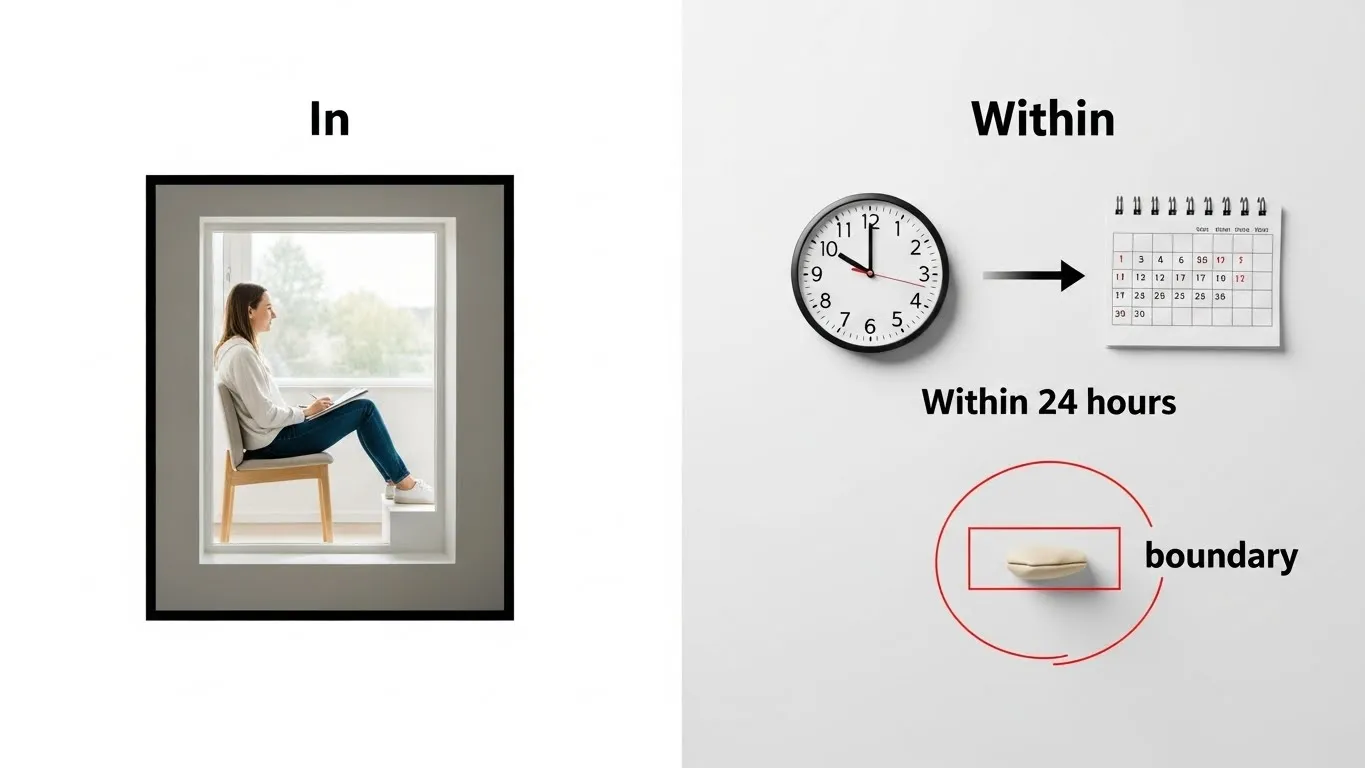
In means inside something or during a period of time.
Within means inside a clear limit, boundary, or deadline.
Examples:
- She is in the room.
- Please reply within 24 hours.
- He finished the work in two days.
- The shop is within walking distance.
👉 Use in for general location or time.
👉 Use within when you want to stress limits or deadlines.
The Origin of In or Within
The word “in” comes from Old English “in,” meaning inside or enclosed. It has been used for over a thousand years and is one of the most basic English prepositions.
“Within” developed later from “with” + “in,” meaning inside the bounds of. Over time, it gained a more formal and precise tone. Unlike many English word pairs, in and within are not spelling variants—they are different words with related meanings.
There are no spelling differences between British and American English for these words. The difference is about usage and clarity, not spelling.
British English vs American English Spelling
There is no spelling difference between British and American English for in or within.
| Aspect | British English | American English |
| Spelling | in / within | in / within |
| Usage | Slightly more formal use of “within” | Same usage |
| Meaning | Identical | Identical |
✅ Both varieties follow the same rules.
Which One Should You Use?
Your choice depends on audience and tone:
- US audience:
Use in for casual writing, within for formal or legal text. - UK & Commonwealth:
Within is often preferred in official writing. - Global audience:
Use within when clarity matters; use in for simplicity.
👉 If precision matters, choose within.
👉 If simplicity matters, choose in.
Common Mistakes with In or Within
❌ I will reply in 24 hours (unclear deadline)
✅ I will reply within 24 hours
❌ The file is within the folder (too formal)
✅ The file is in the folder
❌ Finish this within Monday
✅ Finish this by Monday or within two days
In or Within in Everyday Examples
within spelling
- I will contact you within one business day.
News:
- The decision was made within the government.
Social Media:
- Back in five minutes!
Formal Writing:
- The payment must be made within 30 days.
- Read Also.Meet or Met: What’s the Difference and When Should You Use Each?
In or Within – Google Trends & Usage Data
Search data shows that “in” is used far more often worldwide due to its simplicity. However, “within” spikes in searches related to:
- Legal documents
- Business emails
- Deadlines and contracts
Countries like the UK, Canada, and Australia show slightly higher usage of within in formal contexts.
Comparison Table: In vs Within
| Feature | In | Within |
| Meaning | General inside or time | Limited space or time |
| Tone | Casual | Formal |
| Precision | Low | High |
| Common Use | Conversation | Business & legal |
FAQs: In or Within
1. Can in and within be interchangeable?
Sometimes, but within is more precise.
2. Is within more formal than in?
Yes, especially in business or legal writing.
3. Is there any spelling difference?
No. Both are spelled the same in US and UK English.
4. Which is better for deadlines?
Within is clearer for deadlines.
5. Can I use in for time limits?
Yes, but it may sound less exact.
6. Which is better for SEO writing?
Use both naturally, based on context.
Conclusion
Understanding the difference between in and within is small but powerful. While in keeps your writing simple and natural, within adds clarity, limits, and professionalism.
Neither word is better in all cases the key is intent. If you are describing a general place or time, in works perfectly. If you are setting boundaries, deadlines, or rules, within is the stronger choice.
For emails, social posts, and casual writing, in feels friendly and smooth. For contracts, policies, and formal instructions, within prevents misunderstanding.
Since there are no spelling differences between British and American English, your focus should always be meaning, not region.
By choosing carefully, you improve clarity, confidence, and credibility in your writing. Mastering in or within is a small step that makes a big difference.

Michael Swan is known for writing practical English usage guides.
His work helps learners avoid common spelling and grammar mistakes.