
This small choice causes big confusion. Many people search “miss or mrs” because they are not sure which title is correct, polite, or modern.
The mistake can feel awkward especially in formal emails, letters, school forms, or wedding invitations.
The confusion happens because Miss and Mrs both refer to women, but they do not mean the same thing. One shows marital status.
The other does not. Some people think they are old-fashioned. Others think they are the same word with different spelling. That is not true.
You will learn the exact meaning of Miss and Mrs, where they came from, how British and American English treat them, and which one you should use today.
Miss or Mrs – Quick Answer
Miss is used for an unmarried woman.
Mrs is used for a married woman.
Simple examples:
- Miss Ali is not married.
- Mrs Khan is married.
If you do not know a woman’s marital status, use Ms instead.
The Origin of Miss or Mrs
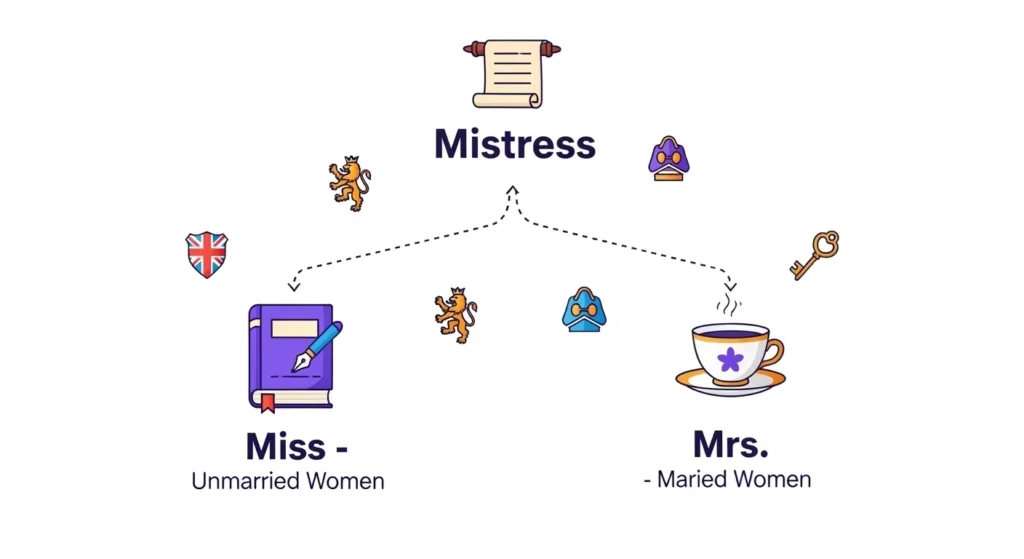
Both Miss and Mrs come from the old word “Mistress.”
Miss
- Appeared in the 1600s
- Used for young or unmarried women
- Showed age and marital status
Mrs
- Short for Mistress
- Used for married women
- Often followed by the husband’s last name
Over time, English changed. People wanted polite titles. So Mistress split into Miss and Mrs.
Why confusion exists
- Both words sound similar
- Both come from the same root
- Modern culture avoids marital labels
That is why many people now prefer Ms.
British English vs American English Spelling
There is no spelling difference between British and American English for Miss or Mrs.
They are spelled the same in all major English systems.
Comparison Table
| Title | British English | American English | Meaning |
| Miss | Miss | Miss | Unmarried woman |
| Mrs | Mrs | Mrs | Married woman |
| Ms | Ms | Ms | Neutral / unknown |
Key point
The rules are cultural, not spelling-based.
Which Spelling Should You Use?
It depends on who you are writing to.
For the United States
- Use Ms if unsure
- Use Mrs only if you know she is married
- Avoid guessing
For the UK & Commonwealth
- Ms is standard and polite
- Miss still used in schools and formal lists
- Mrs used when clearly married
For global or professional writing
✔ Ms is the safest choice
It avoids mistakes and feels modern.
Read More.Woman or Women – Which One Is Correct?
Common Mistakes with Miss or Mrs
❌ Mistake 1: Using Mrs for all women
- Wrong: Mrs Sara
- Correct: Ms Sara (if unsure)
❌ Mistake 2: Thinking Miss means young
- Miss does not mean age
- It means unmarried
❌ Mistake 3: Mixing titles
- Wrong: Miss Mrs Khan
- Correct: Choose one
❌ Mistake 4: Using Mrs without last name
- Wrong: Mrs Ayesha
- Correct: Mrs Ayesha Malik
Miss or Mrs in Everyday Examples
Emails
- Dear Ms Ahmed, (safe and professional)
- Dear Mrs Khan, (if married and known)
News Writing
- “Mrs Smith spoke at the event.”
- “Miss Johnson won the award.”
Social Media
- “Congrats Mrs Ali 💍”
- “Proud of you Miss Zara!”
Formal Documents
- Application forms often ask:
- ☐ Miss
- ☐ Mrs
- ☐ Ms
Miss or Mrs – Google Trends & Usage Data
Searches for “miss or mrs” are common in:
- Pakistan
- India
- UK
- United States
Why people search it
- Writing emails
- Filling forms
- Wedding planning
- School communication
- Job applications
Modern trend
- Ms is rising
- Miss and Mrs are declining in professional use
- Cultural use still strong in South Asia
Comparison Table: Miss vs Mrs vs Ms
| Feature | Miss | Mrs | Ms |
| Marital status | Unmarried | Married | Neutral |
| Modern use | Medium | Medium | High |
| Professional safe | ❌ | ❌ | ✔ |
| Requires knowing status | ✔ | ✔ | ❌ |
FAQs: Miss or Mrs
1. Is Miss outdated?
No. It is still correct but less common professionally.
2. Can a married woman use Miss?
Traditionally no, but personal choice matters today.
3. Is Mrs rude to use?
No, but guessing can be rude.
4. What is the safest option?
Ms is always safe.
5. Do British and American English differ?
No spelling difference at all.
6. Should I use Mrs after marriage?
Only if the woman prefers it.
7. Is Ms the same as Miss?
No. Ms does not show marital status.
Conclusion
Choosing between Miss or Mrs may look simple, but it carries meaning. Miss shows an unmarried woman. Mrs shows a married woman. The spelling never changes in British or American English, but the context does.
The biggest mistake people make is guessing. In modern English, guessing marital status is risky and unnecessary. That is why Ms has become the most polite and professional option worldwide.
If you know a woman prefers Miss or Mrs, respect her choice. If you do not know, Ms keeps things correct, respectful, and modern.
Language changes, but clarity matters. Now you know exactly when to use Miss or Mrs, and when to avoid both.

Michael Swan is known for writing practical English usage guides.
His work helps learners avoid common spelling and grammar mistakes.