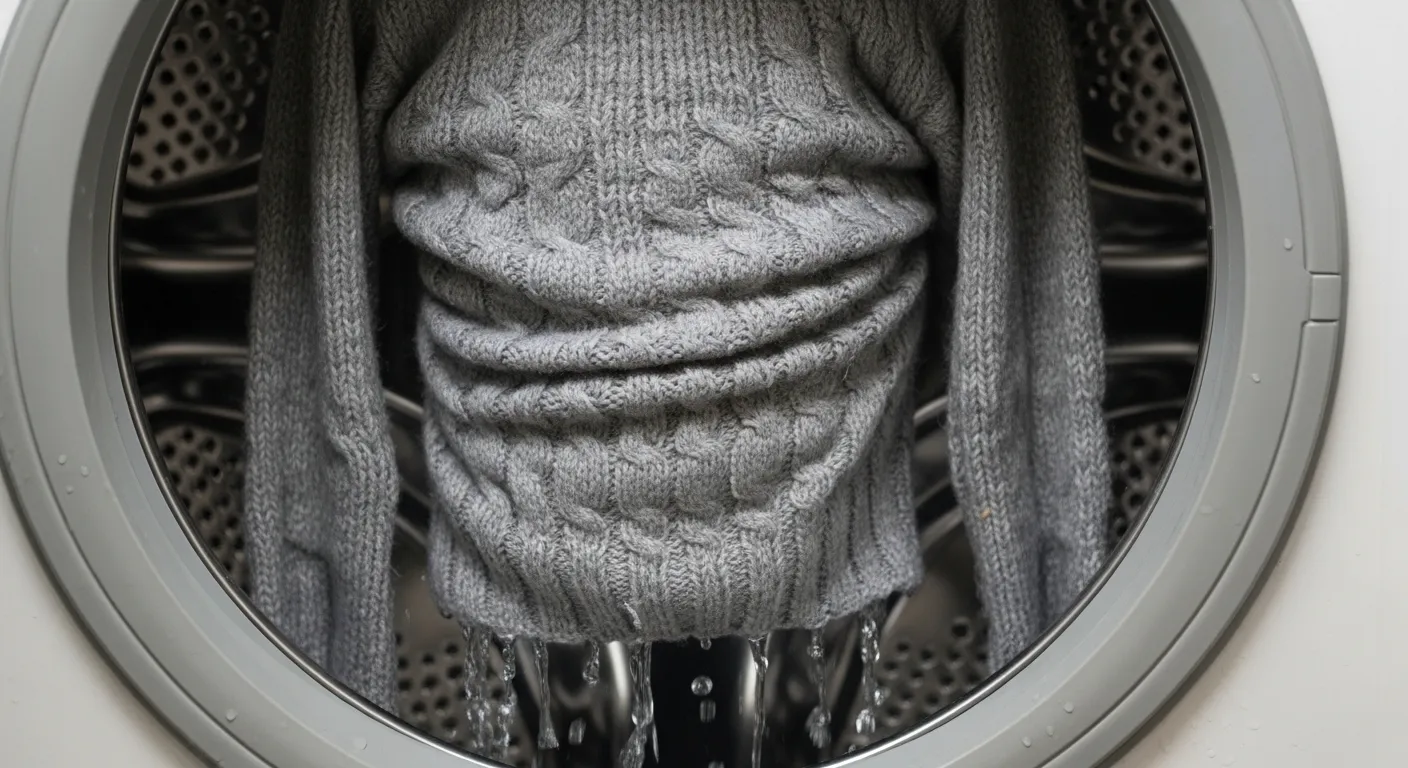
Have you ever paused mid-sentence, unsure whether to write shrank or shrunk? You’re not alone. This small grammar choice confuses students, writers, bloggers, and even native English speakers.
Both words come from the verb shrink, both sound correct, and both appear in real writing so which one should you actually use?
People search for “shrank or shrunk” because English verb tenses don’t always follow neat rules. Some verbs change once, others change twice, and a few seem to break every rule in the book.
Shrink is one of those tricky verbs that has two past forms, each with a different job. Mixing them up can make your sentence sound awkward or incorrect, especially in formal writing.
This article clears up the confusion once and for all. You’ll get a quick answer, real examples, history behind the words, British vs American usage, common mistakes, and professional advice on which form to use.
By the end, you’ll know exactly when to use shrank and when shrunk without second-guessing yourself again.
Shrank or Shrunk – Quick Answer
Shrank is the simple past tense of shrink.
Shrunk is the past participle of shrink.
Examples:
- Yesterday, my sweater shrank in the wash.
- My sweater has shrunk after several washes.
Rule to remember:
- Use shrank for actions finished in the past.
- Use shrunk with has, have, or had.
The Origin of Shrank or Shrunk
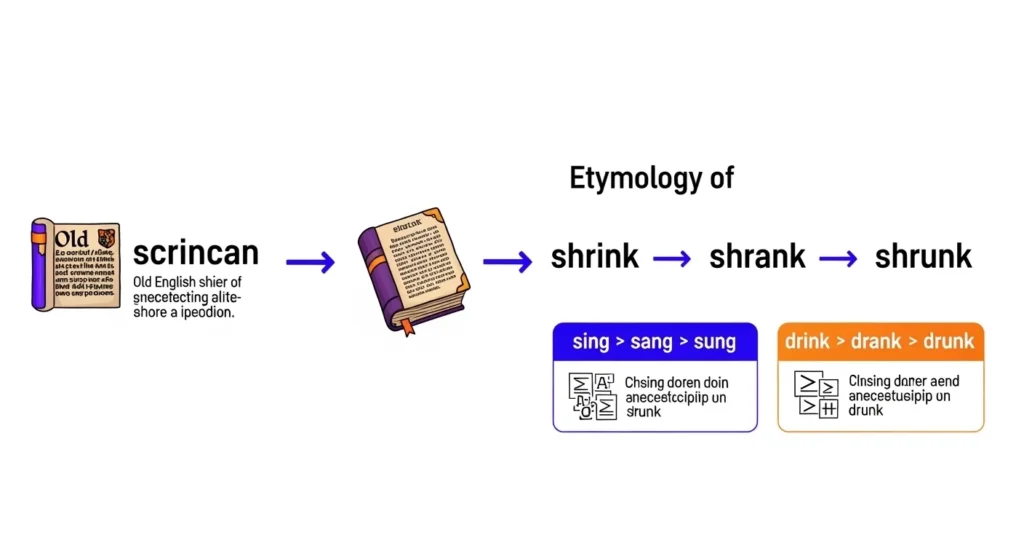
The verb shrink comes from Old English scrincan, meaning “to contract” or “to shrivel.” Over time, English developed strong verbs, which change vowels instead of adding -ed.
That’s why shrink follows this pattern:
- Present: shrink
- Past: shrank
- Past participle: shrunk
This vowel shift (i → a → u) is common in English:
- sing → sang → sung
- drink → drank → drunk
The spelling differences exist because English evolved from Germanic roots, not because modern English wanted to be confusing—though it sometimes feels that way.
British English vs American English Spelling
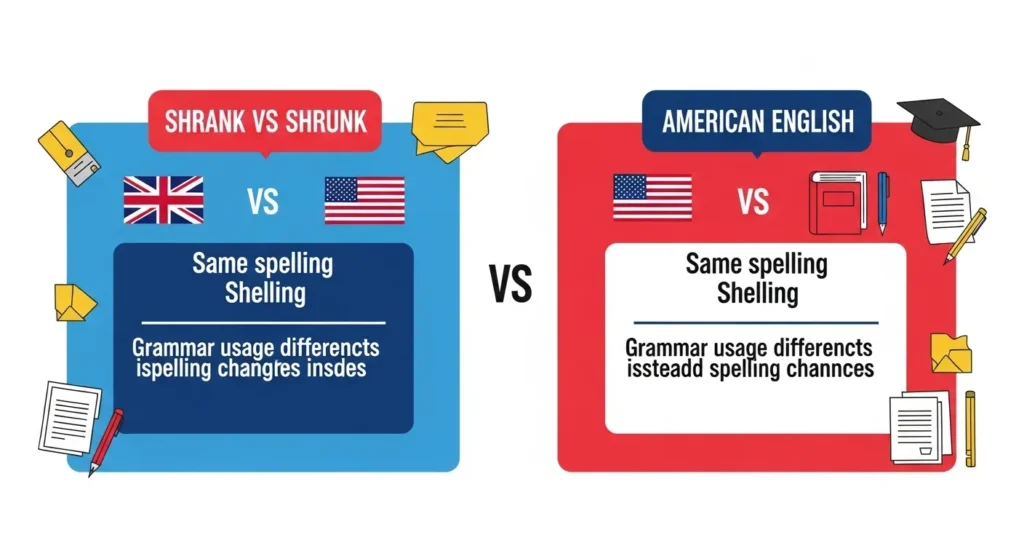
Good news: there is no spelling difference between British and American English for shrank and shrunk. Both follow the same grammar rules.
However, usage preference can vary slightly.
Comparison Table
| Form | British English | American English | Example |
| shrank | ✔ Common | ✔ Common | Sales shrank last year. |
| shrunk | ✔ Common | ✔ Common | The shirt has shrunk. |
| shrunk (simple past – informal) | ⚠ Sometimes | ⚠ Sometimes | My jeans shrunk. |
In formal writing, both UK and US prefer:
- shrank → simple past
- shrunk → past participle
Which Spelling Should You Use?
It depends on your audience and sentence structure.
Use shrank if:
- You are writing about a finished past action
- You are writing formal content (essays, reports, news)
Example:
The company’s profits shrank in 2023.
Use shrunk if:
- The sentence includes has, have, or had
- You are describing a result
Example:
The market has shrunk rapidly.
Audience-based advice:
- US audience: Follow strict grammar rules
- UK/Commonwealth: Same rules apply
- Global/SEO writing: Use correct tense to appear professional and trustworthy
Common Mistakes with Shrank or Shrunk
Many errors happen because people treat both words as interchangeable.
❌ Incorrect:
- My sweater has shrank.
- The economy shrunk last year.
✅ Corrected:
- My sweater has shrunk.
- The economy shrank last year.
Easy fix:
If you can add has before the verb, use shrunk.
Read More.Stopped or Stoped Which Spelling Is Correct?
Shrank or Shrunk in Everyday Examples
Emails
- Sales shrank after the price increase.
- Our customer base has shrunk recently.
News
- The lake shrank due to drought.
- Wildlife habitats have shrunk over decades.
Social Media
- My hoodie shrank 😭
- These jeans have shrunk again!
Formal Writing
- The dataset shrank significantly.
- The available budget has shrunk.
Shrank or Shrunk – Google Trends & Usage Data
Search data shows that “shrank or shrunk” is most commonly searched in:
- United States
- United Kingdom
- India
- Pakistan
- Australia
Why? Because English learners and professionals want quick grammar clarity.
Usage patterns:
- Shrank appears more in news and academic writing
- Shrunk appears more in conversational and explanatory content
Both are correct but context decides which one fits.
Comparison Table: Shrank vs Shrunk
| Feature | Shrank | Shrunk |
| Verb form | Simple past | Past participle |
| Needs helper verb | ❌ No | ✔ Yes |
| Formal writing | ✔ Yes | ✔ Yes |
| Common mistake | Used with “has” | Used alone |
| Example | Prices shrank. | Prices have shrunk. |
FAQs: Shrank or Shrunk
1. Is shrunk grammatically correct?
Yes. It is the correct past participle of shrink.
2. Can I say “my shirt shrunk”?
Informally, yes. Formally, it should be “my shirt shrank.”
3. Which is correct: has shrank or has shrunk?
Has shrunk is correct.
4. Do British and American English differ here?
No. Both use the same forms.
5. Why does shrink have two past forms?
It is a strong verb with vowel changes from Old English.
6. Is shrunk ever wrong?
Only when used as a simple past in formal writing.
7. What’s the easiest way to remember?
Past only → shrank
Has/have/had → shrunk
Conclusion
The confusion between shrank or shrunk comes from how English handles strong verbs. While both words are correct, they serve different grammatical roles.
Shrank is used for actions that clearly happened in the past, while shrunk works with helping verbs to show results or ongoing effects.
If you’re writing an email, article, academic paper, or professional content, choosing the right form matters. It improves clarity, builds credibility, and helps your writing sound natural and polished.
Remember the simple test: if has fits, use shrunk. If not, shrank is your answer.
Mastering small grammar points like this gives you more control over your English. Once you understand the pattern, you won’t hesitate again and that confidence shows in your writing.

Mark Nichol is an English language writer and editor.
He focuses on spelling confusion, word comparisons, and clear usage rules.