
Almost everyone has heard the phrase truth or dare, but many people still search for it online. Why? Because they want a clear meaning, correct usage, rules of the game, and examples they can use confidently.
Some people wonder if it has different spellings. Others want to know if it is formal or informal, or how to use it in writing and social media.
Truth or dare is more than just a party game. It is a phrase that shows choice, honesty, and challenge. You hear it at sleepovers, see it in movies, and even read it in headlines and social posts.
People also get confused about whether it changes in British or American English, or if there are variations of the keyword.
This article solves all that confusion. You will get a quick answer, history, spelling rules, examples, common mistakes, and usage advice. The language is simple, clear, and beginner-friendly.
By the end, you will know exactly what truth or dare means, how to use it, and when it fits best.
Truth or Dare – Quick Answer
Truth or dare is a popular phrase and game where a person must choose between telling the truth or doing a challenge.
Examples:
- “Do you choose truth or dare?”
- “We played truth or dare at the party.”
- “It was a fun game of truth or dare with friends.”
It is informal and mostly used in spoken English, games, and casual writing.
The Origin of Truth or Dare
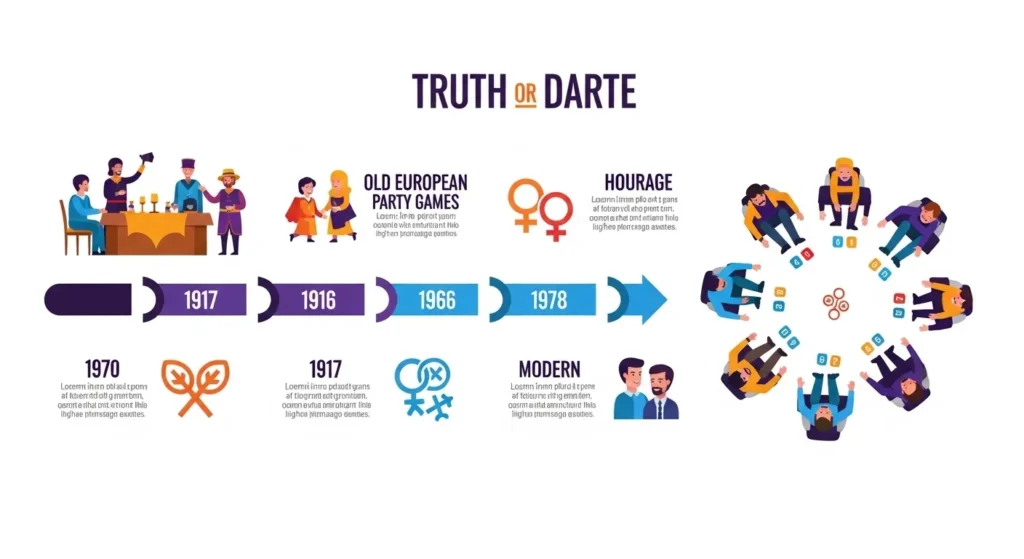
The phrase truth or dare comes from an old party game. The game began in Europe many centuries ago. Early versions were played by adults and children as a way to test honesty and courage.
The idea is simple:
- Truth means answering a question honestly.
- Dare means doing a task or challenge.
Over time, the phrase became fixed. There are no spelling variations because it is a set expression made of common English words. Movies, TV shows, and social media helped make truth or dare popular worldwide.
British English vs American English Spelling
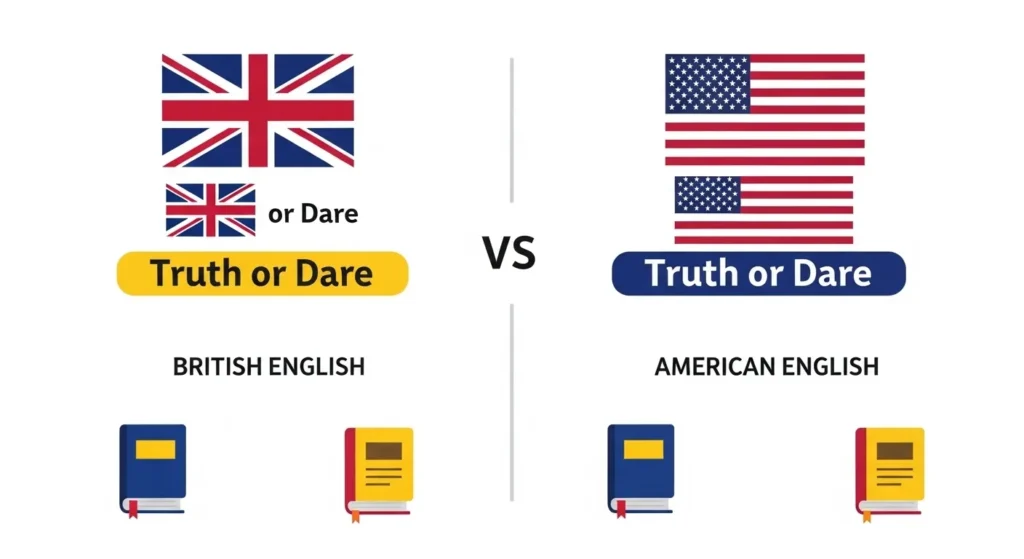
There is no spelling difference between British and American English for truth or dare.
Both English styles use the same words and spelling.
Spelling Comparison Table
| English Style | Spelling Used |
| American English | truth or dare |
| British English | truth or dare |
| Australian English | truth or dare |
| Global English | truth or dare |
Unlike words such as theater/theatre, this keyword stays the same everywhere.
Which Spelling Should You Use?
You should always use truth or dare exactly as written.
- US audience: truth or dare
- UK audience: truth or dare
- Commonwealth countries: truth or dare
- Global audience: truth or dare
There is no alternative spelling, so you never need to adjust it for region or audience.
Read More.Fiancé or Fiancée – Which Spelling Is Correct and When to Use It?
Common Mistakes with Truth or Dare
Even though it is simple, people still make mistakes.
❌ Common Errors
- Writing truth and dare
- Capitalizing without reason: Truth Or Dare
- Using it in formal documents
- Adding extra words like truths or dares
✅ Correct Usage
- Use truth or dare
- Keep it lowercase in normal sentences
- Use it only in informal or creative contexts
Truth or Dare in Everyday Examples
Emails
- “The team played truth or dare during the office party.”
News
- “The movie ‘Truth or Dare’ gained popularity among teens.”
Social Media
- “Let’s play truth or dare tonight 😄”
- “Truth or dare challenge going viral!”
Formal Writing
In formal writing, avoid it unless you are explaining the game:
- “The study analyzed social games like truth or dare.”
Truth or Dare – Google Trends & Usage Data
The keyword truth or dare is popular worldwide. Searches increase during:
- Holidays
- School breaks
- Party seasons
- Social media challenges
Popular Regions
- United States
- United Kingdom
- India
- Canada
- Australia
People mostly search it for:
- Game rules
- Questions and dares
- Online versions
- Meaning and usage
Truth or Dare – Keyword Variations Comparison
| Variation | Correct | Usage |
| truth or dare | ✅ Yes | Standard and correct |
| truth and dare | ❌ No | Incorrect |
| truths or dares | ❌ No | Incorrect |
| Truth or Dare | ⚠️ Sometimes | Only as a title |
FAQs About Truth or Dare
1. What does truth or dare mean?
It means choosing between telling the truth or doing a challenge.
2. Is truth or dare a game?
Yes, it is a popular party game played worldwide.
3. Is truth or dare formal English?
No, it is informal and casual.
4. Does truth or dare have different spellings?
No, the spelling is the same in all English types.
5. Can truth or dare be used in writing?
Yes, but mostly in informal or creative writing.
6. Is truth or dare used in British English?
Yes, exactly the same as American English.
7. Why do people search for truth or dare?
They want rules, meaning, examples, and correct usage.
Conclusion
Truth or dare is a simple but powerful phrase. It is easy to understand, easy to spell, and used the same way across all English-speaking countries. There is no British or American spelling difference, which makes it even simpler for learners and writers.
The phrase comes from a long-standing party game that tests honesty and bravery. Today, it is common in conversations, social media, movies, and casual writing.
The key is knowing when to use it. It fits perfectly in informal settings but should be avoided in professional or serious documents.
If you remember one thing, remember this: truth or dare has only one correct spelling and one clear meaning. Use it confidently when talking about the game or making fun, friendly choices.
This clarity helps you write better, speak naturally, and avoid common mistakes.

Michael Swan is known for writing practical English usage guides.
His work helps learners avoid common spelling and grammar mistakes.