
Have you ever wondered whether it’s “signer” or “signor”? Many people get confused when choosing between these two words, especially in formal writing, legal documents, or casual communication.
This confusion often arises because both words sound similar, but they have completely different meanings and origins. Knowing the difference can save you from embarrassing mistakes in emails, contracts, or social media posts.
People search for “signer or signor” because they want to ensure their writing is correct, professional, and contextually accurate. While one word refers to someone who signs a document, the other is a title in Italian culture.
Understanding these differences helps writers, professionals, and English learners communicate clearly and confidently. This guide will give you a quick answer, explain origins, show examples, and provide practical advice for everyday use.
Signer or Signor – Quick Answer
Quick Answer:
- Signer – Correct English term for a person who signs a document.
- Signor – Italian word meaning “Mister” or “Sir.”
Examples:
- Signer: “The signer of the contract must provide identification.”
- Signor: “I met Signor Rossi in Rome.”
Key Tip: If you are writing in English about signing documents, always use signer. Use signor only when referring to Italian titles or names.
The Origin of Signer or Signor
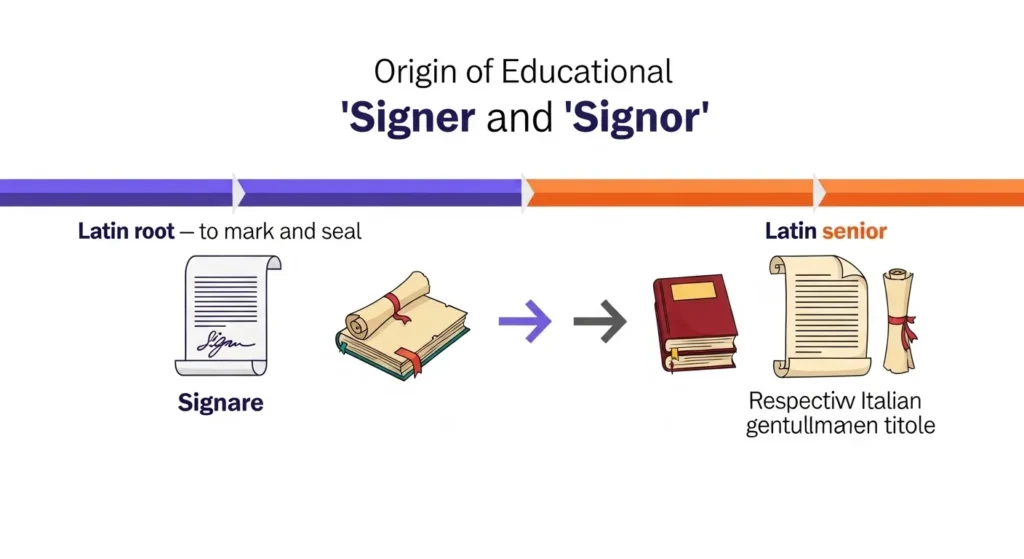
Signer:
The word “signer” comes from the verb “to sign,” which originates from Latin signare, meaning “to mark or seal.” In English, it has been used since the 16th century to refer specifically to a person who signs a document, check, or agreement.
Signor:
“Signor” is borrowed from Italian, where it is a respectful title similar to “Mister” in English. It comes from Latin senior, meaning “older” or “respected man.” In Italian culture, it is used before a man’s surname or full name.
Summary: One is an English functional word, and the other is a cultural title in Italian.
Read More.Either or Neither: Understand the Grammar Difference Easily
British English vs American English Spelling
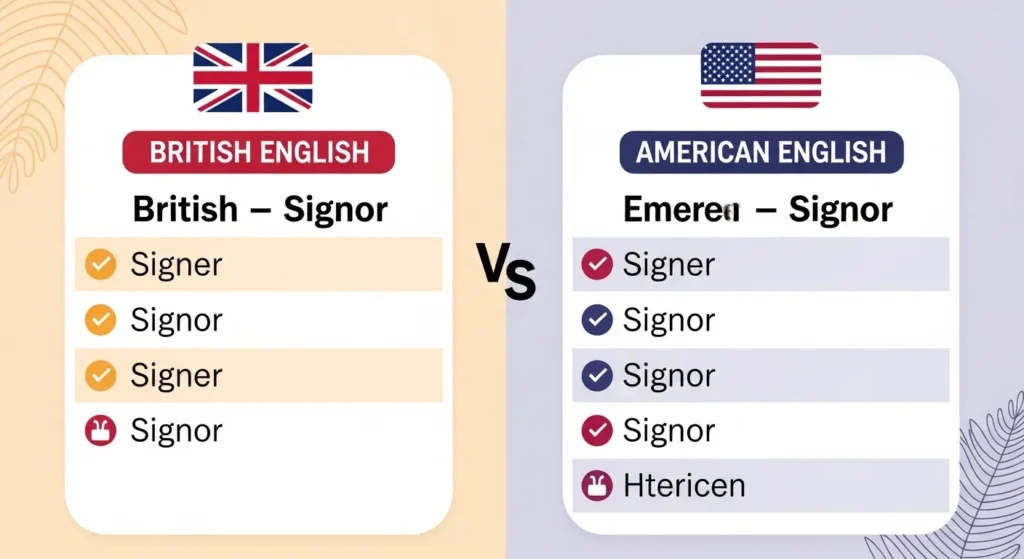
When it comes to signer, there is no difference between British and American English. Both use signer for someone who signs a document.
Signor is a proper noun/title from Italian and does not change in spelling based on English dialects.
Comparison Table:
| Word | Usage | British English | American English |
| Signer | Person signing a document | signer | signer |
| Signor | Italian title (“Mister”) | signor | signor |
Key Takeaway: Use signer for English writing; signor stays the same as in Italian, regardless of region.
Which Spelling Should You Use?
1. In the US: Always use signer when referring to someone signing a document. Use signor only in Italian names or references.
2. In the UK and Commonwealth countries: Same rule applies. Signer for legal/formal English use; signor only for Italian contexts.
3. Global/Online Writing: If your audience may include non-Italian readers, using signer avoids confusion. Use signor only when quoting Italian texts or proper names.
Rule of Thumb: Ask yourself: “Am I talking about signing a document or addressing an Italian man?” The answer determines which word to use.
Common Mistakes with Signer or Signor
Here are frequent errors people make:
- Wrong context:
- ❌ “The signor of the contract must verify identity.”
- ✅ “The signer of the contract must verify identity.”
- Spelling errors: Writing “signor” when you mean “signer.”
- Mixing languages: Using signer as a title before a name is incorrect.
- Mispronunciation in English: Some may pronounce signer like sign-or, which confuses listeners with signor.
Pro Tip: Always remember the meaning first—“signer = signing, signor = Italian Mister.”
Signer or Signor in Everyday Examples
Emails:
- “Please review the attached document and ensure all signers have completed the forms.”
News:
- “The treaty was signed by multiple signers from around the world.”
Social Media:
- “Waiting for the final signer to approve the agreement.”
Formal Writing:
- “Each signer must provide valid identification and witness verification.”
Italian Contexts:
- “Signor Bianchi will join us for the ceremony.”
By seeing the words in context, it becomes easier to remember which is correct.
Signer or Signor – Google Trends & Usage Data
- Signer: High usage in English-speaking countries, especially in legal, finance, and business contexts.
- Signor: Limited usage in English, mostly appearing in travel, cultural, or Italian-themed content.
Observation: Confusion spikes when people hear the words phonetically in conversation or online. Using Google Trends, “signer” dominates searches in the US, UK, Canada, and Australia. “Signor” spikes in Italy-related travel searches or literature references.
Keyword Comparison Table
| Feature | Signer | Signor |
| Meaning | Person who signs a document | Italian title (“Mister”) |
| Origin | English from Latin signare | Italian from Latin senior |
| Usage Context | Legal, formal, emails, contracts | Italian culture, names |
| Spelling Diff. | Same in UK & US | Same in UK & US |
| Common Error | Confusing with “signor” | Using as English signer |
FAQs
1. Can I use signor instead of signer in English?
No. Signer is the correct English word for someone who signs a document. Signor is an Italian title.
2. Is signer only used in legal documents?
No. It’s used in contracts, agreements, forms, petitions, and any context where a signature is needed.
3. How do I pronounce signer and signor differently?
- Signer: /ˈsaɪ.nər/
- Signor: /siˈɲor/ or “see-nyor” (Italian pronunciation)
4. Can signor appear in English literature?
Yes, but only as part of Italian names or cultural references, not as a synonym for signer.
5. Do British and American English differ in using signer?
No, both use signer identically. Spelling or meaning does not change.
6. What’s the female equivalent of signor?
In Italian, Signora is used for women, equivalent to “Mrs.” or “Ms.”
7. How can I avoid mixing signer and signor?
Always think about the context: document signing → signer; Italian name/title → signor.
Conclusion
Choosing between signer and signor is simple once you understand the context. Signer refers to someone signing a document, form, or agreement in English.
Signor is a respectful Italian title, equivalent to “Mister.” Confusing these words can create minor but noticeable errors in professional communication.
For legal documents, emails, business contracts, or social media posts in English, always use signer. Reserve signor for Italian names or cultural references. Remember that spelling doesn’t change between British and American English, so consistency is easy.
By understanding origins, pronunciation, and proper context, you can confidently use the right word in writing and speech. Always check context first signing documents or addressing Italian gentlemen to ensure accuracy.
Following these guidelines keeps your communication clear, professional, and culturally aware.

Michael Swan is known for writing practical English usage guides.
His work helps learners avoid common spelling and grammar mistakes.