Have you ever seen the words supra or infra in legal documents, research papers, or formal emails and wondered what they mean? You’re not alone. Many people search for “supra or infra” because these words look similar, sound technical, and are often used without explanation. The confusion usually comes from not knowing when to use which term, or whether one is more correct than the other.
Both supra and infra are Latin words still used in modern English, especially in law, academics, medicine, and official writing. They don’t compete with each other like spelling variants do; instead, they serve different directional meanings. Misusing them can confuse readers or make your writing look unprofessional.
This article clears up that confusion in simple terms. You’ll get a quick answer, learn where these words come from, see how they differ in British and American English, and understand how to use them correctly in real life. Whether you’re a student, professional, or content writer, this guide will help you use supra or infra with confidence.
Supra or Infra – Quick Answer
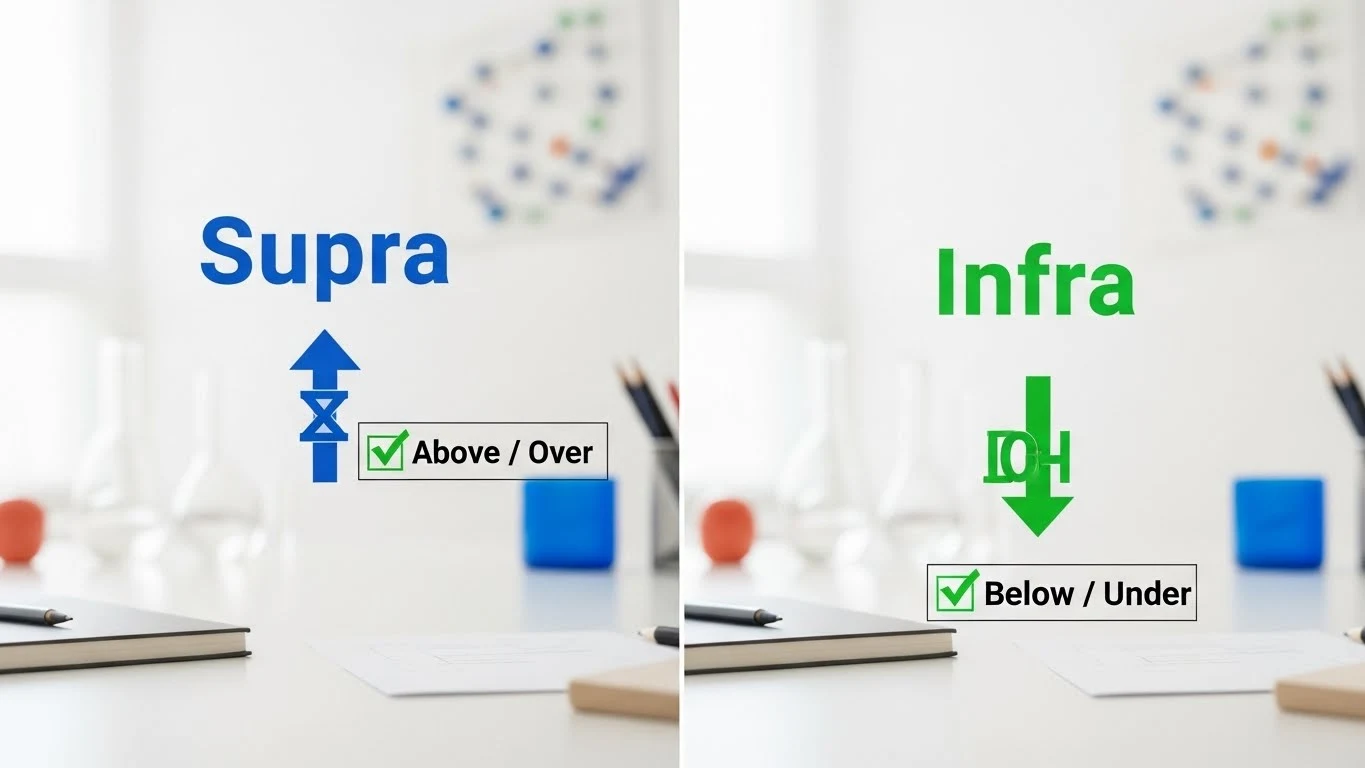
Supra means above or earlier in the text.
Infra means below or later in the text.
Examples:
- See Section 2, supra (refers to an earlier section)
- Details are explained infra (refers to a later section)
They are not interchangeable. Each points in a different direction.
The Origin of Supra or Infra
Both words come from Latin.
- Supra = “above”
- Infra = “below”
They entered English through legal and academic writing, where precise references are important. Unlike spelling debates, there are no spelling variations here. The confusion exists because both words are Latin, formal, and often used without context.
Over time, English kept these terms mainly in professional fields rather than everyday speech.
British English vs American English Spelling
There is no spelling difference between British and American English for supra or infra.
Both regions:
- Spell them the same
- Use them in formal contexts
- Prefer them in law, research, and technical writing
Comparison Table
| Term | British English | American English | Meaning |
| Supra | Supra | Supra | Above / earlier |
| Infra | Infra | Infra | Below / later |
Which Spelling Should You Use?
Since there are no spelling differences, focus on audience and tone:
- US audience: Use sparingly, mainly in legal or academic work
- UK/Commonwealth: Common in formal and scholarly writing
- Global audience: Consider plain English alternatives like above or below
If clarity matters more than formality, avoid Latin terms.
Common Mistakes with Supra or Infra
Here are frequent errors:
- ❌ Using supra to refer to something later
✅ Use infra instead - ❌ Using both in casual emails
✅ Use above or below - ❌ Assuming they are spelling variants
✅ They are different words with different meanings
Supra or Infra in Everyday Examples
Emails:
- As mentioned supra, please review the policy.
News:
- The report, cited infra, outlines new findings.
Social Media:
- Rarely used; plain English is better.
Formal Writing:
- Refer to Table 1, supra, for details.
Supra or Infra – Google Trends & Usage Data
Search interest for “supra or infra” is highest among:
- Law students
- Researchers
- Professionals editing formal documents
Usage is strongest in:
- United States
- United Kingdom
- India
- Pakistan
Most searches aim to understand meaning and correct usage, not spelling.
Comparison Table: Supra vs Infra
| Feature | Supra | Infra |
| Meaning | Above | Below |
| Direction | Earlier reference | Later reference |
| Common Fields | Law, academia | Law, academia |
| Casual Use | Rare | Rare |
FAQs About Supra or Infra
1. Is supra the same as above?
Yes, in meaning, but it is more formal.
2. Does infra mean under or later?
It means later or below in text.
3. Are supra and infra outdated?
No, but they are formal.
4. Can I use them in emails?
Only in professional or legal emails.
5. Are they capitalized?
No, unless starting a sentence.
6. Do British and American English differ here?
No, both use the same forms.
7. What’s a simpler alternative?
Use above and below.
Conclusion
Understanding supra or infra is less about spelling and more about direction and context. These two Latin terms serve different purposes: supra points readers to something earlier, while infra guides them to information that comes later. They are not interchangeable, and using the wrong one can confuse readers or weaken your credibility.
There is no British or American spelling difference, which makes them easier to learn. However, their formal tone means they should be used carefully. In legal, academic, and technical writing, they are still useful and accepted. In everyday communication, plain English alternatives often work better.
If your audience values precision and formality, supra or infra can be effective tools. If clarity and simplicity matter more, choose above or below. Knowing when and how to use these terms helps you write with confidence and professionalism.

Michael Swan is known for writing practical English usage guides.
His work helps learners avoid common spelling and grammar mistakes.