
Have you ever stood in a grocery store, looked at a dairy label, and wondered: Is it yogurt or yoghurt? You are not alone.
Millions of people search for “yogurt or yoghurt” every year because both spellings appear correct but they are used in different places.
This confusion often shows up when writing blogs, product descriptions, school assignments, emails, or even social media posts. One website may use yogurt, while another insists on yoghurt.
Spellcheck tools sometimes flag one version and accept the other. That makes writers pause and doubt themselves.
The good news is simple: both spellings are correct. The difference is not about meaning. It is about where English is used. American English prefers one spelling.
British English prefers another. Once you understand this, the confusion disappears.
In this guide, you’ll get a quick answer, a clear history, side-by-side comparisons, real-life examples, and expert advice on which spelling you should use. By the end, you’ll never hesitate again.
Yogurt or Yoghurt – Quick Answer
Yogurt and yoghurt mean the same thing: a thick dairy food made by fermenting milk with bacteria.
- Yogurt is used in American English
- Yoghurt is used in British English
Examples
- US: I eat yogurt every morning.
- UK: She bought strawberry yoghurt from the shop.
There is no difference in taste, type, or nutrition only spelling.
The Origin of Yogurt or Yoghurt
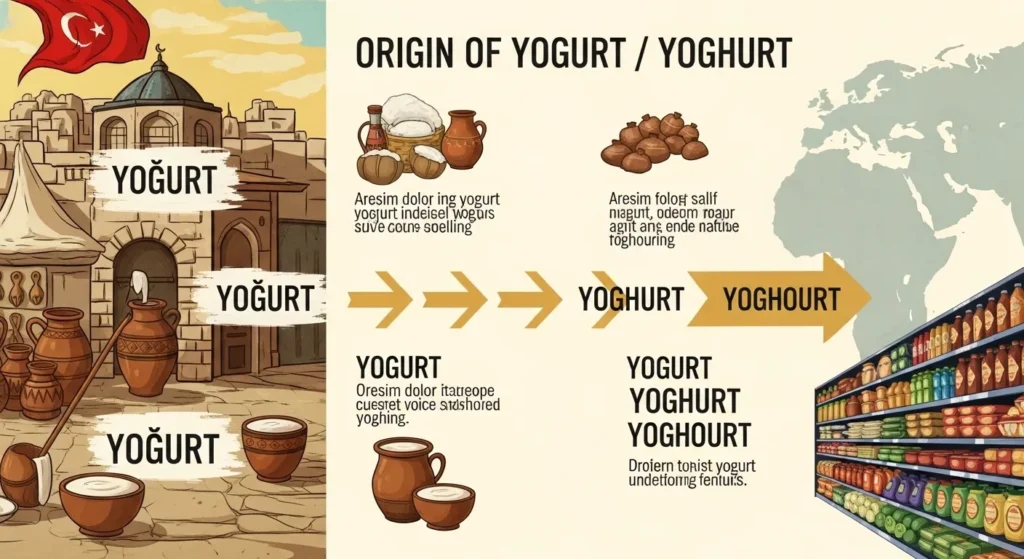
The word comes from the Turkish word “yoğurt”, which means to thicken or curdle. Yogurt has been eaten for thousands of years in the Middle East and Central Asia.
When the word entered English in the early 1900s, writers tried different spellings:
- yogurt
- yoghurt
- yoghourt
British English kept the “gh” to match older European spellings.
American English simplified the word to yogurt, removing extra letters.
This pattern happens often in English:
- colour → color
- favourite → favorite
- programme → program
So the spelling difference is historical, not grammatical.
Read More.Sunburned or Sunburnt: Which Spelling Is Correct?
British English vs American English Spelling
The main rule is simple:
- American English = simpler spelling
- British English = traditional spelling
Examples in sentences
- American English: Greek yogurt is high in protein.
- British English: Greek yoghurt is high in protein.
Comparison Table
| Feature | Yogurt | Yoghurt |
| English type | American English | British English |
| Used in | USA | UK, Australia, NZ |
| Dictionary style | Simplified | Traditional |
| Meaning | Fermented milk food | Fermented milk food |
| Correct? | ✅ Yes | ✅ Yes |
Which Spelling Should You Use?
Choose your spelling based on your audience.
Use yogurt if:
- Your readers are in the United States
- You write for American brands or blogs
- You follow AP style or US SEO rules
Use yoghurt if:
- Your audience is in the UK
- You write for Australia, New Zealand, or South Africa
- You follow British academic writing
For a global audience:
- Pick one spelling
- Stay consistent
- American spelling (yogurt) is more widely searched online
Consistency matters more than the spelling itself.
Common Mistakes with Yogurt or Yoghurt
Here are mistakes people often make and how to fix them.
❌ Mixing spellings
- Wrong: This yogurt tastes better than that yoghurt.
- Right: This yogurt tastes better than that yogurt.
❌ Thinking one is incorrect
- Wrong: Yoghurt is a spelling mistake.
- Right: Yoghurt is British English.
❌ Using both for SEO
- Wrong: Overusing both spellings in one paragraph
- Right: Use one main keyword, mention the other naturally
❌ Spellcheck confusion
Some tools flag yoghurt as wrong if set to US English. Change language settings instead.
Yogurt or Yoghurt in Everyday Examples
Emails
- US: Please add yogurt to the shopping list.
- UK: Please add yoghurt to the shopping list.
News Articles
- US: Yogurt sales increase during summer.
- UK: Yoghurt sales rise during heatwaves.
Social Media
- US: Love my morning yogurt bowl 🥣
- UK: Homemade yoghurt is the best!
Formal Writing
- US: Yogurt consumption has increased worldwide.
- UK: Yoghurt consumption has increased worldwide.
Same meaning. Different spelling.
Yogurt or Yoghurt – Google Trends & Usage Data
Search data shows a clear pattern:
- Yogurt dominates searches in:
- United States
- Canada
- Philippines
- Yoghurt is more popular in:
- United Kingdom
- Australia
- New Zealand
Globally, yogurt has higher total search volume due to US traffic. That’s why many international websites prefer the American spelling.
Yogurt or Yoghurt Comparison Table
| Aspect | Yogurt | Yoghurt |
| Region | USA | UK & Commonwealth |
| SEO popularity | Higher | Lower |
| Style guides | AP, Chicago | Oxford |
| Pronunciation | Same | Same |
| Meaning | Same | Same |
FAQs About Yogurt or Yoghurt
1. Are yogurt and yoghurt the same thing?
Yes. They are the same food with different spellings.
2. Which spelling is correct?
Both are correct. It depends on regional English.
3. Is yogurt American English?
Yes. Yogurt is the American spelling.
4. Is yoghurt British English?
Yes. Yoghurt is standard in British English.
5. Which spelling is better for SEO?
Yogurt performs better globally due to higher US searches.
6. Can I use both spellings in one article?
It’s better to choose one and stay consistent.
7. Why does British English use extra letters?
British English keeps traditional spellings from history.
Conclusion
The confusion between yogurt or yoghurt is common but now it should be clear. Both spellings are correct.
They describe the same creamy, fermented food loved around the world. The only difference is where English is used.
If you write for an American audience, yogurt is the best choice. If your readers are in the UK or Commonwealth countries, yoghurt feels natural and correct.
For global content, many writers choose yogurt because it has higher search demand and wider recognition.
The most important rule is consistency. Pick one spelling and use it everywhere in headings, body text, and metadata. This improves clarity, trust, and performance.
Language changes with place, not meaning. Once you understand that, spelling stops being stressful. Whether you spell it yogurt or yoghurt, you’re still talking about the same delicious food.

Michael Swan is known for writing practical English usage guides.
His work helps learners avoid common spelling and grammar mistakes.